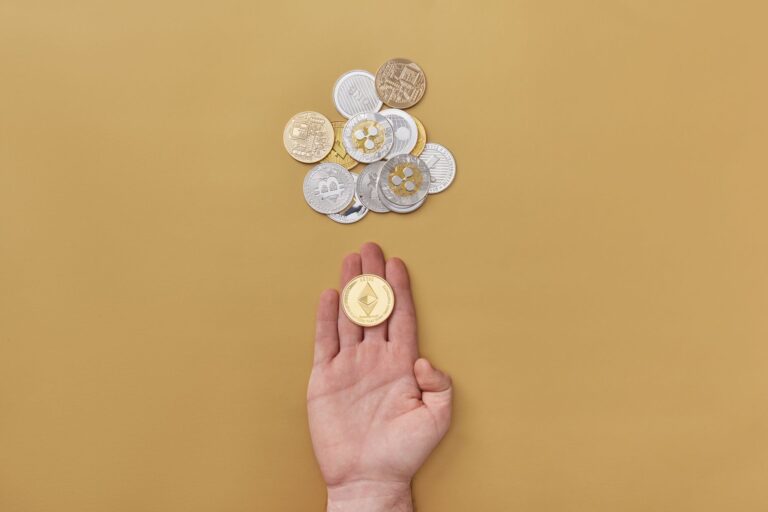

The core of the NFT vs crypto question is one word: fungibility. Cryptocurrencies like Bitcoin and Ethereum are fungible, meaning every unit is identical and interchangeable, just like dollars. NFTs (non-fungible tokens) are non-fungible, meaning each one is unique and not interchangeable, like a specific piece of art or a numbered collectible. Both live on blockchains, both are bought with wallets, and NFTs are usually purchased using crypto, so they are deeply related rather than opposed. This guide compares them across how they work, their use cases, how they hold value, and their risks.
Key takeaways
- Crypto is fungible (interchangeable units); NFTs are non-fungible (each token is unique).
- Both are blockchain-based tokens; NFTs are typically bought and sold using cryptocurrency.
- Crypto is mainly used as money, store of value, and fuel for networks; NFTs represent ownership of specific items.
- Crypto value comes largely from network demand and utility; NFT value is more subjective and collectible-driven.
- They are complementary, not competing: you generally need crypto to participate in NFTs.
NFT vs Crypto: Quick Comparison
| Dimension | Cryptocurrency | NFT |
|---|---|---|
| Fungibility | Fungible — every unit is identical and interchangeable | Non-fungible — each token is unique and not interchangeable |
| What it represents | A unit of digital currency or value | Ownership of a specific item (art, collectible, access, etc.) |
| Primary use | Payments, store of value, network fees, trading | Digital collectibles, art, memberships, in-game items |
| Divisibility | Highly divisible (e.g., fractions of a coin) | Typically indivisible — owned as a whole unit |
| How value is set | Market demand, supply, utility, liquidity | Scarcity, demand for the specific item, community, utility |
| How you buy it | On exchanges with fiat or other crypto | On NFT marketplaces, usually paid for with crypto |
| Liquidity | Generally high for major coins | Generally lower; depends on the collection |
What Is Cryptocurrency?
Cryptocurrency is digital money secured by cryptography and recorded on a blockchain, a distributed ledger maintained by a network of computers rather than a central bank. Bitcoin pioneered the idea as peer-to-peer electronic cash; Ethereum extended it by adding programmable smart contracts.
The defining property is fungibility. One bitcoin is exactly equal to and interchangeable with any other bitcoin, the same way any ten-dollar bill is worth the same as any other. This interchangeability is what makes crypto usable as money: you don’t care which specific unit you receive, only how many. Cryptocurrencies are also highly divisible, so you can hold and send tiny fractions. To get started with crypto, many people first learn how to buy Ethereum, since ETH is the currency that powers most NFT activity.
What Is an NFT?
An NFT, or non-fungible token, is a blockchain token that represents ownership of a unique item. The “non-fungible” part is the whole point: each NFT has a distinct identity and cannot be swapped one-for-one with another. Two NFTs from the same collection may look similar but are separate, individually identifiable assets, often with different traits, rarity, and value.
NFTs are commonly used for digital art, collectibles, profile pictures, music, in-game items, event tickets, and membership passes. The token itself usually points to the item and records who owns it on-chain. Importantly, the NFT proves ownership of that token; what rights come with it (copyright, commercial use, utility) depend on the project. For a deeper primer, see our guide to what NFTs are.
The Key Difference: Fungibility
Everything else flows from fungibility. A fungible asset is one where each unit is identical and substitutable. Money, gold, and crude oil are fungible. A non-fungible asset is unique and not substitutable: a specific house, an original painting, a named concert ticket for a specific seat.
This is why you measure crypto in quantities (“I have 0.5 ETH”) but NFTs as individual items (“I own NFT #1234 from this collection”). It also explains the difference in liquidity. Because every coin is interchangeable, there’s always a market price and ready buyers for major crypto. Because every NFT is unique, selling one means finding a buyer who specifically wants that item, which can take time or may not happen at the price you hope.
What They Have in Common
Despite the differences, NFTs and crypto share the same foundations:
- Both are blockchain tokens. NFTs and cryptocurrencies are recorded on the same kinds of blockchains, often the same chain (for example, both ETH and many NFTs live on Ethereum).
- Both are held in crypto wallets. You use a self-custody wallet to store and manage either one. Set one up with our crypto wallet guide.
- NFTs are usually bought with crypto. To buy an NFT, you typically pay in the chain’s native cryptocurrency and cover network “gas” fees in that same coin.
- Both rely on the same security practices. Protecting your seed phrase and avoiding scams matters equally for coins and NFTs.
This is why framing it as “NFT vs crypto” can be misleading. In practice, NFTs are a category of asset that sits on top of crypto infrastructure and is paid for with crypto.
Use Cases Compared
What crypto is good for
Cryptocurrencies function as money and as the economic fuel of blockchain networks. People use them to transfer value across borders, as a potential store of value (most prominently Bitcoin), to pay transaction fees, and as the base assets of DeFi, where they can be lent, borrowed, staked, or supplied to liquidity pools. Because they are fungible and liquid, they slot naturally into financial use cases.
What NFTs are good for
NFTs shine where uniqueness and provable ownership matter. That includes digital art and collectibles, gaming items that players truly own, membership and access passes, ticketing, and representing real or digital assets that are one-of-a-kind. The same uniqueness that makes NFTs poor as money makes them well suited to representing specific things.
How Value Works for Each
Crypto value is driven largely by supply and demand for a fungible asset with network utility: how many people want to hold or use it, how scarce it is, and how useful the underlying network is. Major coins have deep, liquid markets and continuous price discovery.
NFT value is more subjective and item-specific. It depends on the desirability of the particular piece, the strength and culture of its community, perceived rarity within a collection, any utility attached, and broader market sentiment toward NFTs. This makes NFT pricing far less predictable and often far less liquid. An NFT is only worth what a specific buyer will pay for that specific item at that moment.
Risks: NFT vs Crypto
Both carry significant risk, but the risk profiles differ:
- Crypto risks: high volatility, regulatory uncertainty, exchange or protocol failures, and loss from poor key management. Liquidity is usually present for major coins, so you can typically exit, even if at a loss.
- NFT risks: all of the above plus low liquidity (you may be unable to sell at all), highly subjective valuations, the risk of buying counterfeit collections, and project abandonment or rug pulls. NFT markets can also be far more illiquid and sentiment-driven than crypto markets.
In short, NFTs tend to be the higher-variance, lower-liquidity end of the crypto risk spectrum.
Which Should You Choose?
It’s not strictly either/or. If your goal is exposure to digital assets as money or a potential store of value, with relatively better liquidity, cryptocurrency is the more straightforward choice. If you want to own specific digital items, support creators, access communities, or collect art, NFTs are the right tool, but expect lower liquidity and more subjective pricing.
Practically, most NFT participants need crypto first: you buy a coin like ETH, fund a wallet, then use that crypto to buy NFTs and pay gas. For beginners, a sensible path is to understand and acquire crypto first, get comfortable with wallet security, and only then explore NFTs with money you can afford to lose. You can browse coins and learn the basics through the coins hub.
FAQ
Is an NFT a type of cryptocurrency?
Not exactly. Both are blockchain tokens, but a cryptocurrency is fungible (every unit is identical and interchangeable), while an NFT is non-fungible (each token is unique). You can think of NFTs as a distinct category of crypto asset built on the same blockchain infrastructure and usually purchased using cryptocurrency, rather than as a currency themselves.
Do I need crypto to buy an NFT?
In almost all cases, yes. NFTs are typically bought on marketplaces using the blockchain’s native cryptocurrency, and you also pay network “gas” fees in that coin. For NFTs on Ethereum, that usually means owning ETH. Some platforms add card payment options, but underneath, the purchase still settles in crypto.
Which is riskier, NFTs or crypto?
Both are high risk, but NFTs generally sit at the riskier end. They share crypto’s volatility and security risks while adding low liquidity, highly subjective valuations, counterfeit collections, and project-abandonment risk. With major cryptocurrencies you can usually sell at some price; with NFTs, you may struggle to find any buyer at all.
Are NFTs and crypto stored the same way?
Yes. Both are held in crypto wallets and secured by the same private keys and seed phrase. A single self-custody wallet can hold cryptocurrencies and NFTs together. Because of this, the same security habits apply: protect your seed phrase, beware of scams, and consider a hardware wallet for valuable holdings.
Crypto is volatile and risky; this is education, not financial advice. Do your own research.