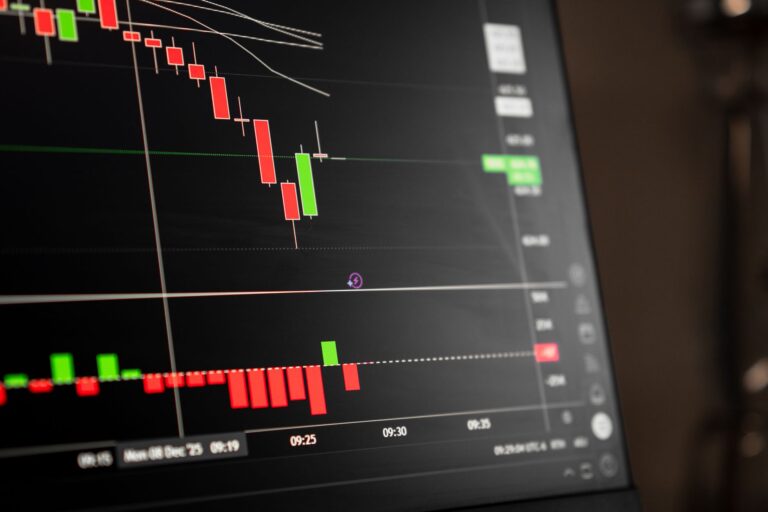

The short answer: NFTs are not “dead,” but the market looks very different from the 2021 mania that made headlines. Trading volumes and speculative prices collapsed in 2022–2023, and many low-effort collections went to zero. What remains is a smaller, quieter market where activity is shifting from pure speculation toward utility — gaming items, tokenized real-world assets, identity, and ticketing. Whether you call that “dead” or “maturing” depends on what you expected NFTs to be. This article walks through the rise, the crash, and where non-fungible tokens actually stand in 2026, without hype in either direction.
Key takeaways
- NFTs are not extinct, but the speculative bubble of 2021 deflated sharply and never fully returned.
- Trading volume and floor prices crashed in 2022–2023; the vast majority of collections lost most of their value or became illiquid.
- The market is consolidating around utility: gaming assets, real-world asset (RWA) tokenization, memberships, and identity.
- NFT markets are cyclical and follow the broader crypto cycle — “dead” often just means “out of the hype phase.”
- Most NFTs are illiquid and speculative; treat any purchase as a high-risk, possibly total-loss bet, not an investment with expected returns.
What people mean when they ask “are NFTs dead?”
The question usually mixes several different ideas together. Some people mean the cartoon profile-picture (PFP) collections that defined 2021. Others mean NFTs as a technology — a way to record verifiable ownership of a unique digital item on a blockchain. And some mean the broader “make life-changing money flipping JPEGs” narrative.
It is worth separating these. The flipping narrative is, for most people, genuinely over. The PFP market is a shadow of its peak. But the underlying technology keeps being used, and a handful of established collections still trade with real liquidity. If you want a refresher on the mechanics behind all of this, our explainer on what NFTs are covers how ownership is recorded on-chain.
The 2021 boom: how we got here
NFTs existed years before 2021 (CryptoKitties caused Ethereum congestion back in 2017), but they exploded into the mainstream during the 2021 bull market. A combination of cheap money, pandemic-era online attention, celebrity endorsements, and rapidly rising crypto prices created a feedback loop. Digital art sold for millions, profile-picture collections became status symbols, and new projects launched almost daily.
At the peak, monthly NFT trading volumes ran into the billions of dollars, and blue-chip collections commanded floor prices of tens of thousands of dollars worth of ETH. Much of this was driven by speculation: buyers expected to sell to someone else at a higher price, a dynamic that only works while new money keeps arriving.
The 2022–2023 crash
When the broader crypto market turned down in 2022 — alongside rising interest rates and high-profile collapses across the industry — NFT activity fell off a cliff. Several things happened at once:
- Volume collapsed. Monthly trading volumes dropped by huge percentages from their peak as speculative demand evaporated.
- Floor prices fell. Even well-known collections saw their floor prices decline sharply in dollar terms, compounded by falling ETH prices. For context on this metric, see our guide to the NFT floor price.
- Liquidity vanished. The bigger problem for most collections was not just lower prices but the inability to sell at any reasonable price. Thousands of projects became effectively worthless and untradeable.
- Scams were exposed. Many projects turned out to be cash grabs, and a wave of rug pulls and abandoned roadmaps damaged trust. Our breakdown of what a rug pull is explains the pattern.
By 2023, “NFTs are dead” became a common headline. For the average 2021 buyer chasing flips, that sentiment was understandable — most were holding bags worth a fraction of what they paid.
Why “dead” is the wrong frame
Crypto markets, including NFTs, are intensely cyclical. Each cycle has a euphoric peak, a brutal drawdown, and a long quiet period where prices stay low and attention disappears. During those quiet periods, the prevailing narrative is always that the asset is finished. This has happened to Bitcoin repeatedly, to the broader altcoin market, and now to NFTs.
A more accurate frame is that NFTs left the hype phase. The speculative excess was unsustainable and unwound. What is left is a smaller base of activity, some of which is genuinely useful and some of which is still purely speculative. “Dead” implies no activity and no use cases — that is not what the data shows. “Deflated and consolidating” is closer to the truth.
Cyclical, not terminal
It is entirely possible for NFT trading to see renewed interest in a future bull market, just as it is possible that PFP speculation never returns to 2021 levels. Both can be true. The technology persisting does not guarantee that any particular collection recovers its old price — many never will.
Where NFTs are actually being used in 2026
The more interesting story is the shift in what NFTs are used for. The pure-art-and-PFP era is giving way to use cases where the “ownership token” solves a concrete problem.
Gaming and digital items
Blockchain gaming uses NFTs to represent in-game items, characters, and land that players can own and trade outside a single publisher’s control. The promise is real player ownership; the challenge is that fun games, not token mechanics, drive adoption. This is one of the more active corners of the NFT world, though most projects still struggle to attract durable player bases.
Real-world asset (RWA) tokenization
One of the fastest-growing themes in crypto generally is tokenizing real-world assets — representing things like treasury bills, real estate, or invoices on-chain. NFTs (and related token standards) can encode unique, non-interchangeable assets, making them a natural fit for items that are not identical to one another. This is a more institutional, less meme-driven use of the underlying technology.
Memberships, ticketing, and identity
NFTs can act as access passes: a token in your wallet grants entry to an event, a community, or a service. Event ticketing is an obvious fit, because tickets are unique, transferable, and prone to fraud. Similar logic applies to credentials and on-chain identity, where a non-transferable token can represent a qualification or membership.
Art and collectibles
Digital art and collecting did not disappear — they shrank back to a smaller, more dedicated audience. Generative and one-of-one art still find buyers, and royalties remain a live (if contested) topic for creators. The difference is that the buyers are now more often collectors than flippers.
What survived, and what didn’t
A useful way to read the current market is to look at the gap between the small number of collections that retained liquidity and the long tail that did not.
- Survivors: A handful of established “blue-chip” collections and ecosystems with strong brands and active communities still trade with meaningful volume. They are far below their peaks but remain liquid.
- The long tail: The overwhelming majority of collections launched in 2021–2022 are now illiquid or worthless. This is normal for a speculative mania — most new ventures fail.
If you are curious which collections are still considered established, our overview of notable NFT projects describes several without making price predictions.
Should you buy NFTs in 2026?
This is not investment advice, and there is no “right” answer. But a few principles apply:
- Assume illiquidity. Unlike major cryptocurrencies, most NFTs cannot be sold instantly at a fair price. You may be unable to exit at all.
- Separate use from speculation. Buying an NFT because you want the membership, the game item, or simply the art is very different from buying it expecting to flip it.
- Expect total loss as a real outcome. For any speculative collection, zero is a plausible result. Never spend money you cannot afford to lose entirely.
- Mind security. NFT holders are frequent targets for phishing and wallet-draining scams. Storing valuable NFTs on a hardware wallet and learning to recognize crypto scams matters more than picking the “right” project.
How to think about the technology vs. the trade
It helps to hold two ideas at once. As a technology, non-fungible tokens are a legitimate, durable primitive for recording unique digital ownership — and they will keep being used in some form. As a trade, the 2021 NFT market was a speculative bubble that burst, and most of the assets created in it are not coming back. Believing in the first idea does not require believing the second will reverse. Many of the same caveats that apply to the wider DeFi and Web3 ecosystem — volatility, scams, and immature products — apply here too.
FAQ
Are NFTs completely dead in 2026?
No. The speculative 2021 boom deflated dramatically, and most collections are now illiquid or worthless, but NFTs as a technology are still actively used in gaming, real-world asset tokenization, ticketing, and memberships. A small number of established collections continue to trade with real liquidity. “Dead” overstates it; “much smaller and out of the hype phase” is more accurate.
Will the NFT market recover?
Nobody can say for certain. NFT markets are cyclical and tend to follow the broader crypto cycle, so renewed speculative interest in a future bull market is possible. However, the technology surviving does not guarantee that any specific collection regains its old price — many never will. Treat any recovery thesis as a scenario with assumptions, not a forecast.
Why did NFT prices crash so hard?
Prices crashed because most NFT demand in 2021 was speculative — buyers expected to resell at a higher price. When the broader crypto market turned down in 2022, new money stopped arriving, the feedback loop reversed, and volume collapsed. Widespread scams, abandoned projects, and falling ETH prices made the decline worse, leaving most collections illiquid.
Is it safe to buy NFTs now?
“Safe” is the wrong word for any speculative crypto asset. Most NFTs are illiquid and can lose all their value, and holders are common targets for phishing and wallet-draining attacks. If you buy, do so for use or enjoyment rather than expected profit, use a hardware wallet for anything valuable, and learn to spot scams before connecting your wallet to any site.
Crypto is volatile and risky; this is education, not financial advice. Do your own research.