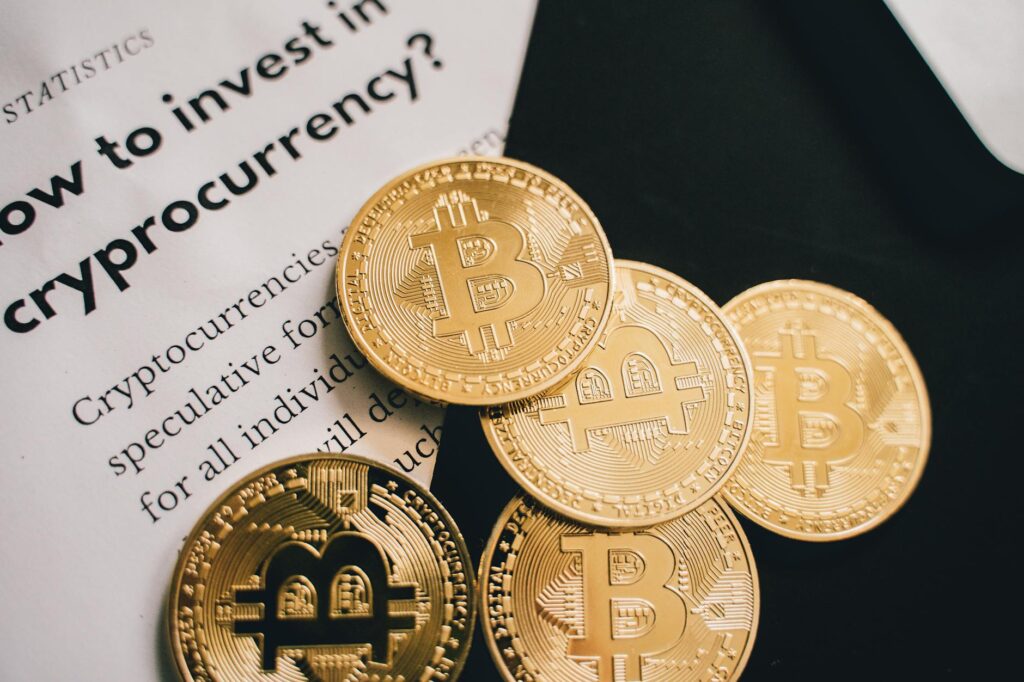
There are two basic ways to make money with crypto: own assets that rise in value, or get paid for providing something (capital, computing power, liquidity, attention or skill). Every strategy below is a version of one of those, and each comes with a different mix of capital needed, time, skill and risk. None is guaranteed, and many people lose money, especially with leverage, presales and active trading. This guide compares ten approaches side by side, shows realistic worked numbers, and explains what typically destroys returns in each so you can decide which, if any, fit your situation.
Key takeaways:
- Long-term holding with dollar-cost averaging is the simplest approach and, historically, the one most likely to have worked for ordinary investors in Bitcoin and Ethereum, despite deep drawdowns.
- Yield (staking, lending, stablecoin rewards) is real but modest; a few percent a year is typical, and high advertised rates usually mean high hidden risk.
- Mining, including container setups, is a business whose profit hinges on electricity cost and hardware efficiency.
- Airdrops, trading and presales can pay off, but outcomes are lumpy and most participants earn little or lose.
- Nearly every method creates taxable events; track them from day one.
The 10 Strategies at a Glance
| Strategy | Starting capital | Time needed | Typical outcome | Biggest risk |
|---|---|---|---|---|
| 1. Buy and hold (DCA) | Any amount | Minutes a month | Tracks the market over years | Multi-year drawdowns of 70%+ |
| 2. Staking | Low | Low | Low single-digit % on major chains | Token price; lockups |
| 3. Stablecoin yield | Low | Low | Variable, a few % in normal markets | Platform or protocol failure |
| 4. Liquidity provision / yield farming | Medium | Medium | Fees plus incentives, highly variable | Impermanent loss, exploits |
| 5. Trading | Medium | High | Most retail traders lose money | Leverage, emotion |
| 6. Airdrops | Low (plus gas) | Medium | Lumpy; often zero | Scams, sybil filters |
| 7. Mining | High | High | Thin margins outside cheap power | Electricity, difficulty |
| 8. Card cashback | None | None | Small rebates on spending | Reward-token value, fees |
| 9. Creating (NFTs, content, services) | Low | High | Depends on audience and skill | No demand |
| 10. Presales and early-stage tokens | Any | Medium | Most fail | Rug pulls, unlocks |
1. Buy and Hold (HODL) with Dollar-Cost Averaging
You buy a fixed amount on a schedule, for example $100 every two weeks, regardless of price, and hold for years. DCA removes the temptation to time the market and averages your entry price. Historically, people who held Bitcoin through full four-year cycles came out ahead, but they had to sit through declines of 70% or more along the way, and past performance doesn’t guarantee future results. Concentrate on assets with long track records rather than whatever is trending. Our DCA guide shows how to set up recurring buys and avoid fee drag.
What kills returns: panic-selling in a crash, buying small-cap tokens that never recover, and paying high spreads on convenience apps.
2. Staking
Proof-of-stake networks pay you for locking tokens that help secure the network. On major chains such as Ethereum, rewards have generally been in the low single digits per year; some smaller chains advertise more, but often because they’re issuing lots of new tokens, which dilutes holders.
Worked example: stake 1 ETH worth $3,000 at a 3% reward rate and you’d earn about 0.03 ETH, roughly $90, in a year if the price didn’t change. If ETH falls 30%, the staking income doesn’t come close to offsetting the loss. Staking is a way to earn a little more on something you already want to hold, not a reason to buy it. See our how to stake crypto guide for exchange vs self-custody options, lockup periods and slashing.
3. Stablecoin Yield and Lending
You lend dollar-pegged tokens such as USDC to a lending protocol or put them in an exchange’s rewards program and earn interest without crypto price exposure. In the US, the GENIUS Act (2025) bars stablecoin issuers themselves from paying interest, so yield comes from platforms and DeFi lending markets, and the rules for platform “rewards” remain contested. Rates move with borrowing demand; double-digit rates usually signal hidden risk (as 2022’s Celsius and BlockFi collapses showed). Read our guide to earning interest on stablecoins before choosing a platform.
4. Liquidity Provision and Yield Farming
You deposit pairs of tokens into a DEX pool and earn a share of trading fees, sometimes plus incentive tokens. Returns can look high, but impermanent loss (you end up with more of whichever token fell) and smart-contract exploits can wipe them out. Start with stablecoin-to-stablecoin pools on established DEXs, track your result versus simply holding, and expect to spend time monitoring.
5. Trading
Buying and selling over days, hours or minutes to profit from price swings. Crypto’s 24/7 volatility makes it tempting, but trading against professional market makers is hard, and leverage turns ordinary moves into liquidations. If you want to try, paper-trade first, risk a small fixed percentage per trade, always use stop-losses and keep a journal. Treat any “signal group” promising consistent profits with suspicion.
6. Airdrops
Projects sometimes distribute free tokens to early users, often based on points earned by using their app, bridge or network before launch. Some airdrops have been worth thousands of dollars to active users; many recent ones have been small, and projects now filter out “sybil” farmers running many wallets. Use a separate wallet, only interact with apps you’d use anyway, budget for gas, and never “claim” via links in DMs. Tokens are typically taxable as income when received in the US. Our airdrop guide covers eligibility patterns and scams.
7. Bitcoin Mining (Including Mining Containers)
Miners run specialized ASIC machines that compete to add Bitcoin blocks, earning the block reward (3.125 BTC since the April 2024 halving) plus fees, usually through a mining pool that pays out steadily.
How do Bitcoin mining containers make money?
A mining container is a shipping container fitted with racks, power distribution and cooling (air, hydro or immersion) that houses dozens to hundreds of ASICs. The container itself doesn’t earn anything; it’s infrastructure that lets miners deploy machines next to cheap power, such as hydro dams, wind farms or oil fields that would otherwise flare gas. The machines inside earn Bitcoin based on their hashrate.
Simple profit math, for illustration: a modern ASIC producing 200 TH/s at about 17.5 joules per terahash draws roughly 3.5 kW, or 84 kWh a day. At $0.06 per kWh, power costs about $5 a day. Revenue equals hashrate times “hashprice” (dollars earned per TH/s per day), a figure that moves with Bitcoin’s price, network difficulty and fees. If hashprice were $0.045, that machine would earn about $9 a day before pool fees, cooling, maintenance and hardware depreciation. Halve the hashprice or double the power cost and the margin disappears. Check a live hashprice source before running your own numbers. Our mining containers guide covers setup costs and hosting.
8. Crypto Card Cashback
Some debit and credit cards pay rewards in Bitcoin or other tokens on everyday spending. The return is small, typically a percent or two, and can depend on holding or staking the issuer’s token. It’s only “free money” if the card has no fees you wouldn’t otherwise pay and you weren’t going to overspend to chase rewards.
For cards that pay rewards in bitcoin on regular credit spending, our comparison of bitcoin rewards credit cards covers the leading options.
9. Creating: NFTs, Content and Services
Artists sell NFTs directly to collectors, earning from primary sales. Secondary-sale royalties, once a dependable second income, became optional or limited on several major marketplaces from 2023, so most creators now rely on primary sales, editions and commissions rather than resale royalties. Beyond NFTs, people earn by writing, teaching, developing smart contracts, auditing code or doing community and support work for crypto projects, usually paid in stablecoins or tokens. This is the one category where skill, not capital, drives results.
10. Presales and Early-Stage Tokens
Buying tokens before they list on exchanges can occasionally produce large gains, but most presale projects fail, many are outright scams, and even legitimate ones often face heavy selling when team and investor tokens unlock. If you participate, use only money you’d be fine losing entirely, check who the team is, read the vesting schedule and avoid anything promoted with guaranteed returns or celebrity endorsements.
Important Reality Check
- Survivorship bias: you hear about winners, not the many who lost money.
- Guaranteed returns are a red flag: any offer promising fixed daily or monthly profits is very likely a scam.
- Taxes: selling, swapping, staking rewards, mining income and airdrops are generally taxable in the US. Keep records and see our crypto tax guide.
- Security: earnings mean nothing if your wallet is drained; use a hardware wallet for long-term holdings.
FAQ
What’s the easiest way to make money with crypto?
For most people, the lowest-effort approach is regular dollar-cost averaging into established assets like Bitcoin or Ethereum and holding long term, optionally staking ETH for a small yield. It requires little skill or time but demands patience through large price swings. It won’t produce quick riches, and gains aren’t guaranteed.
How much money do I need to start?
You can start DCA or staking with as little as $10-50 on most exchanges. Trading, liquidity provision and especially mining need more capital to make fees and equipment costs worthwhile. Start with an amount you could lose entirely without affecting your rent, savings or emergency fund.
Is crypto passive income real?
Yes, but it’s modest and never risk-free. Staking and lending pay real yields, typically low single digits on major assets, while higher rates usually come with smart-contract, platform or token-price risk. Many “passive” crypto products that promised high returns, such as some 2021-2022 lending platforms, collapsed and froze customer funds.
Can you make a living from crypto?
Some people do, mostly by working in the industry (development, security, research, content, operations) or running businesses such as mining with cheap power. Living off trading or yield is far harder and requires significant capital and risk tolerance. For most people, crypto works better as one part of a broader financial plan.
Crypto is volatile and risky; this is education, not financial advice. Do your own research.
Can I make money with crypto without investing any money?
Yes, but usually only small amounts. Zero-capital options include exchange referral bonuses, learn-and-earn quizzes, browser rewards and cashback on spending you’d do anyway, which together tend to pay a few dollars to tens of dollars. Larger earnings without capital come from skill: writing, development, auditing code or community work paid in stablecoins or tokens. Airdrops can occasionally pay more, though they usually need some crypto for gas. Anything promising big returns for no money down is likely a scam.
Can I lose more money than I put into crypto?
With ordinary spot buying, no: the most you can lose is what you invested. Leverage changes that. Margin and futures positions can be liquidated quickly, and in some products or jurisdictions you may owe more than your deposit. Borrowing against crypto in DeFi can also lose your collateral if prices fall. Taxes can catch people out too, since a gain realized early in the year may still be owed even if the reinvested money later falls in value.
How do I decide when to take profits on crypto?
Set rules before you need them, because decisions made during a rally are usually emotional. Common approaches include selling a fixed percentage after an asset doubles, rebalancing back to a target allocation on a schedule, or taking out your original stake and letting the rest ride. Think about taxes too: in the US, holding longer than a year usually qualifies gains for lower long-term rates. Whichever method you choose, write it down and stick to it.