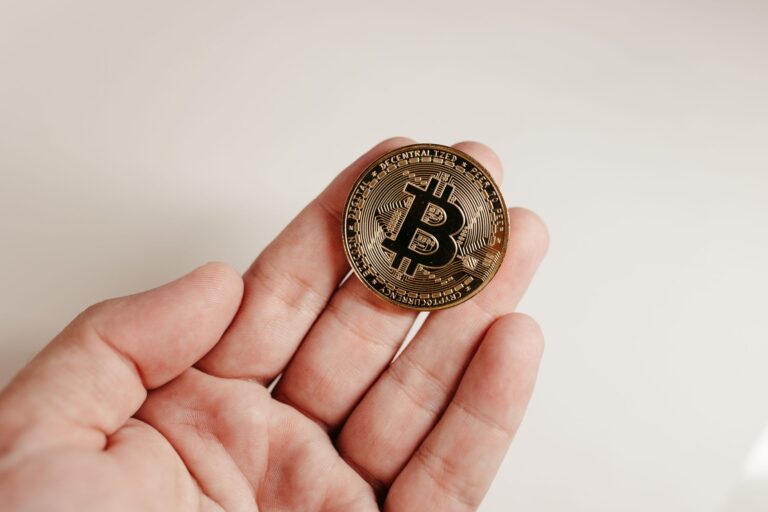
Last Updated: October 2026
Cryptocurrency is digital money recorded on a shared public ledger, called a blockchain, that thousands of independent computers keep in sync. Instead of a bank confirming that you own funds, the network does, using cryptography to make sure only the holder of the right private key can move them. Bitcoin, launched in January 2009, was the first; there are now thousands of others, from Ethereum to dollar-pegged stablecoins. This guide explains what cryptocurrency is in plain English: how a transaction actually works, the main types, why any of it has value, who regulates it, how to turn it back into dollars, and how to start without making the classic beginner mistakes.
Key takeaways
- A cryptocurrency is a balance on a blockchain controlled by a private key, not a file you store.
- Bitcoin is designed as scarce digital money; Ethereum and similar networks run programmable apps; stablecoins track a currency such as the US dollar.
- Prices are set by supply and demand and can fall more than 50% within months.
- In the US, crypto is legal and regulated piecemeal by several agencies; a dedicated stablecoin law passed in 2025, while a broader market-structure bill stalled in the Senate in 2026.
- Most people start by buying a small amount on a regulated exchange and learning to secure it before buying more.
Cryptocurrency in Simple Terms
Imagine a spreadsheet of who owns what that everyone can read, nobody can secretly edit, and new rows can be added only when the network agrees they’re valid. That’s a blockchain. A cryptocurrency is a unit tracked in that spreadsheet. The “crypto” refers to cryptography: digital signatures prove that the person spending coins holds the matching private key, and hashing links each block of transactions to the last so history can’t be quietly rewritten. Read our blockchain explainer for the mechanics.
What Actually Happens When You Send Crypto
- You create a transaction in your wallet: “send 0.001 BTC from my address to this address”, and pay a small network fee.
- Your wallet signs it with your private key. The signature proves authorisation without revealing the key.
- It’s broadcast to the network’s computers (nodes), which check the signature and that you have the funds.
- A block producer includes it. On Bitcoin, miners compete using computing power (proof of work); on Ethereum, validators who have staked ETH take turns (proof of stake).
- The network accepts the block, and every node updates its copy. After a few more blocks, reversing it becomes practically impossible.
On Bitcoin a block arrives roughly every 10 minutes; on Ethereum every 12 seconds; on faster chains in under a second. There’s no “undo” button and no chargeback, which is why sending to the wrong address or a scammer usually means the money is gone. For more depth, see how Bitcoin works.
A Short History of Cryptocurrency
- October 2008: the pseudonymous Satoshi Nakamoto publishes the Bitcoin white paper.
- January 3, 2009: the first Bitcoin block is mined.
- 2014–2015: the first dollar stablecoin (Tether) appears, and Ethereum launches in July 2015, adding programmable smart contracts.
- 2017: the ICO boom, when thousands of tokens are sold to the public, many of them failures or frauds.
- 2020–2021: DeFi and NFTs take off; companies start holding bitcoin.
- 2022: the Terra, Celsius and FTX collapses wipe out billions and reshape regulation.
- 2024–2025: US spot Bitcoin and Ether ETFs launch; the GENIUS Act creates a federal framework for stablecoins (July 2025); bitcoin sets a record near $126,000 in October 2025.
Types of Cryptocurrency
Bitcoin (BTC)
The first and largest cryptocurrency, with supply capped at 21 million coins and new issuance halving roughly every four years. Most people treat it as a store of value (“digital gold”) rather than everyday money.
Beyond fungible coins, there are also unique digital tokens, and our guide to NFTs versus cryptocurrency explains how the two compare.
Ethereum (ETH)
A programmable blockchain where developers deploy smart contracts, self-executing programs that power lending, trading, NFTs and stablecoins. ETH pays for computation (gas) and is staked to secure the network.
Stablecoins
Tokens designed to hold a steady value, usually $1, backed by cash and short-term government debt (USDC, USDT) or by crypto collateral (DAI/USDS). They’re the main way money moves around inside crypto.
Altcoins and platform tokens
“Altcoin” means any crypto other than bitcoin: competing blockchains (Solana, Cardano), tokens for specific applications (Uniswap’s UNI, Aave’s AAVE), and infrastructure (Chainlink).
Memecoins
Tokens driven by internet culture rather than a product (Dogecoin, Shiba Inu, PEPE). Extremely volatile; most new ones lose nearly all their value.
Why Does Cryptocurrency Have Value?
Like any asset without cash flows, crypto is worth what people will pay for it. The reasons buyers give fall into a few groups:
- Scarcity: bitcoin’s fixed supply can’t be expanded by any government or company.
- Usefulness: paying for computation on Ethereum, sending stablecoins across borders in minutes, using DeFi without a bank account.
- Censorship resistance: self-custodied coins can’t be frozen by a single institution, which matters in countries with capital controls.
- Network effects and access: ETFs and regulated exchanges made buying easy for institutions and retirees.
Critics counter that much of the demand is speculative, and price history supports caution: bitcoin has fallen more than 75% several times, and fell about 52% between October 2025 and February 2026.
Who Regulates Cryptocurrency?
There’s no single crypto regulator in the US. Instead:
- SEC: oversees tokens and products that are securities, including crypto ETFs.
- CFTC: treats bitcoin and ether as commodities and oversees futures markets.
- FinCEN and the Treasury: anti-money-laundering rules for exchanges and money transmitters.
- IRS: taxes crypto as property; selling, swapping or spending can be a taxable event.
- States: money-transmitter licences, plus New York’s BitLicense.
The GENIUS Act (July 2025) set federal rules for payment stablecoins. The CLARITY Act, meant to divide oversight between the SEC and CFTC, passed the House in 2025 but failed a 49–50 Senate procedural vote in September 2026 and remains stalled. Elsewhere, the EU applies its MiCA regulation, and hubs such as Hong Kong, Singapore and Dubai license exchanges. See our crypto regulation by country guide.
Cryptocurrency vs. Money in a Bank
| Bank deposit (USD) | Cryptocurrency (self-custodied) | |
|---|---|---|
| Who keeps the record | Your bank | A public blockchain network |
| Who can freeze it | Bank, courts, regulators | Nobody, without your key (stablecoin issuers can freeze their own tokens) |
| Reversible? | Often, via disputes or chargebacks | No |
| Insurance | FDIC up to $250,000 per depositor, per bank | None |
| Availability | Business hours for many transfers | 24/7, worldwide |
| Price stability | Stable in dollar terms | Volatile, except stablecoins |
Neither is strictly better. Crypto trades consumer protections for control and global reach, which is why many people keep everyday money in a bank and treat crypto as a separate, higher-risk holding.
How to Get Started
- Learn the vocabulary: wallet, seed phrase, gas, exchange. Our crypto glossary covers 100+ terms.
- Decide what you want and why: long-term saving, trying DeFi, or speculating. Each leads to different choices; our best crypto for beginners guide helps narrow it down.
- Open an account on a regulated exchange available in your country and verify your identity.
- Buy a small amount you could lose without stress, ideally by bank transfer to keep fees down.
- Turn on app-based two-factor authentication and consider moving larger amounts to a wallet you control.
- Keep records of every purchase and sale for tax purposes.
Turning Crypto Back Into Cash
Yes, crypto can be converted into US dollars in an American bank account. The usual route is to sell on the exchange where you hold it (or send it there first), then withdraw dollars by ACH or wire to a linked bank account; ACH typically takes one to three business days. Bitcoin ATMs and peer-to-peer platforms exist but usually cost much more. Each sale may create a taxable gain or loss. Our step-by-step crypto-to-cash guide compares the options.
Risks of Cryptocurrency
- Volatility: 10% daily moves happen; 50%+ drawdowns happen every cycle.
- Scams: fake investment platforms, romance scams and “support” impostors are the most common ways beginners lose money.
- Self-custody mistakes: lose your seed phrase and nobody can recover your funds.
- Platform failure: exchanges and lenders have collapsed with customer funds inside.
- Regulatory change and tax obligations that are easy to overlook.
FAQ
Is cryptocurrency real money?
It works like money in some ways: it can be sent, stored and exchanged for goods or other currencies. But it isn’t legal tender in the US, its value isn’t backed by a government, and prices swing far more than any national currency. Most people use it as an investment or for specific uses such as cross-border transfers rather than daily spending.
Is cryptocurrency safe?
The major blockchains themselves have proven very hard to attack. Most losses happen around them: scams, hacked exchanges, lost seed phrases and risky apps. Using regulated platforms, enabling strong two-factor authentication, keeping long-term holdings in a hardware wallet and never sharing your seed phrase remove most of the avoidable risk, but not price risk.
How much money do I need to start?
Very little. Cryptocurrencies are divisible, so you can buy $10 or $20 of bitcoin. Watch fees, though: card purchases and small trades on some apps carry high percentage costs. Start with an amount you could lose entirely and learn how sending, receiving and securing works before adding more.
Is crypto legal?
Yes, in the US, EU, UK, Japan, Australia and most other countries, subject to licensing and tax rules. A few countries, including mainland China, ban crypto trading, and rules change often. Check the specific rules where you live before using any platform.
Crypto is volatile and risky; this is education, not financial advice. Do your own research.