

Memecoins are tokens whose value rests on attention, jokes and community rather than a product. That makes them easy to buy and very hard to judge. A few have lasted for years, while most new launches go to zero within days. This hub maps every Shironeko memecoin guide. It explains how memecoins launch, where to buy them, how to check a contract before you swap and how to size a position. Then it points you to the right coin profile, from Dogecoin to the newest cat and frog tokens.
- A memecoin has no cash flow or protocol to fall back on. Its price is set by attention and liquidity, so falls of 90% or more are common.
- How a token launched tells you a lot: a fair launch, a presale, a launchpad bonding curve and an airdrop each carry different insider risks.
- Established memecoins trade on major exchanges. New ones trade only on decentralized exchanges, where fake contracts and rug pulls are routine.
- Before any on-chain buy, check the contract address, liquidity, holder concentration, owner permissions and whether the token can actually be sold.
- Size every memecoin position as if it could go to zero, and decide your exit before you enter.
Start here: which guide do you need?
For a ranked overview of the market and how to evaluate a memecoin, our guide to the best memecoins is the starting point for this cluster. If the category itself is new to you, what is a memecoin explains how these tokens work and why they behave the way they do. Ready to buy? How to buy memecoins is the step-by-step tutorial for wallets, DEX swaps and safety checks. For the culture behind it all, from HODL to “wen moon,” read our guide to crypto memes. This hub stays at the decision level and routes you between them.
How memecoins launch
The launch method decides who holds the supply on day one, and supply concentration is the single biggest predictor of a dump. Four patterns cover most tokens.
| Launch type | How it works | Examples | Main risk |
|---|---|---|---|
| Fair or stealth launch | Deployer adds most of the supply to a DEX pool with no presale; sometimes burns the LP tokens | PEPE, MOG, MEW | “Fair” is a claim, not a guarantee; deployers and snipers can still buy early |
| Presale or crowdfund | Buyers send funds before trading opens and receive tokens at launch | TURBO (crowdfunded) | Organizers can vanish with the raise; presale buyers often sell on listing |
| Launchpad bonding curve | Anyone creates a token in minutes; price rises along a curve until it “graduates” to a DEX pool | Pump.fun and LetsBonk.fun tokens on Solana | Very few tokens graduate; bots and insiders dominate the first minutes |
| Airdrop | Supply is given free to a community, with the rest held by contributors or a DAO | BONK | Recipients sell immediately; contributor allocations may still be large |
Launchpads changed the market most. Pump.fun made token creation nearly free on Solana. Since March 2025, tokens that complete its bonding curve migrate to its own DEX, PumpSwap, instead of Raydium. Research and on-chain trackers put the share of launches that ever graduate below about 1%. Treat a brand-new launchpad token as a lottery ticket with worse odds than it looks.
Buying memecoins: exchange or DEX?
If a memecoin is listed on a large regulated exchange, that is the simpler and safer route for most people. You cannot buy a fake contract from an exchange order book, and you avoid gas, slippage and wallet risks. The big names are widely listed: see how to buy Dogecoin, how to buy Shiba Inu and how to buy PEPE. To choose a platform, the how to buy crypto hub compares exchanges by region and cost.
Newer tokens trade only on decentralized exchanges. You need a self-custody wallet on the right chain (Phantom or similar for Solana, MetaMask or similar for Ethereum and Base), the chain’s gas token, and the official contract address. You swap through Jupiter or Raydium on Solana, or Uniswap on Ethereum and Base. Slippage settings matter: thin pools move fast, and a token that needs very high slippage to buy may carry a hidden sell tax. If your funds sit on another chain, the crypto bridging hub explains how to move them, and the DeFi guides hub covers swaps and slippage in depth.
How to check a contract and spot a rug
A rug pull is any exit where insiders take buyers’ money: draining liquidity, dumping a hidden allocation, or blocking sales. Run these checks before every on-chain buy.
- Contract address: copy it only from the project’s verified channels or a major data aggregator, never from a reply or DM. Copycats of every popular coin exist, and FLOKI, BRETT and PEPE all have many fakes.
- Liquidity: check the pool size on a DEX tracker. Unlocked liquidity, or LP tokens held by the deployer, means the pool can be pulled.
- Holder concentration: look at the top wallets on a block explorer or a bubble-map tool. Clusters of linked wallets holding a large share are the classic dump setup.
- Owner permissions: on Ethereum and Base, see whether ownership is renounced and whether fees can be changed. On Solana, check that mint and freeze authority are revoked.
- Sellability: use a honeypot or token scanner, then test with a tiny buy and sell. The 2021 SQUID token rose sharply while holders could not sell, then collapsed.
Celebrity or political endorsement is not a safety check. In February 2025, the LIBRA token on Solana spiked after Argentina’s president promoted it, then fell more than 90% within hours. On-chain analysts reported that a small cluster of wallets held most of the supply and pulled about $100 million in liquidity. For the wider picture of wallet hygiene and approval risks, see the wallets and security hub.
Position sizing and exits
Memecoin risk is managed before you buy, not after. Common rules among experienced traders:
- Keep all memecoin positions combined to a small slice of your crypto holdings, and each one small enough that a total loss would not change your plans.
- Use a separate wallet for on-chain trading so a malicious approval cannot reach your long-term holdings. Revoke old approvals regularly.
- Decide your exits in advance. Some traders sell part of a position at set multiples or take back their initial stake after a doubling; others use a time limit.
- Avoid leverage. Memecoin perpetuals can be manipulated, as POPCAT’s November 2025 incident on Hyperliquid showed.
- Record every swap. In most countries each trade is a taxable event.
For order types and risk management beyond memecoins, see the crypto trading guides hub.
A guide to the major memecoins
The table summarizes the coins we profile. Launch details come from each guide; market positions change quickly, so check live data before acting.
| Coin | Chain | Launched | What sets it apart | Guide |
|---|---|---|---|---|
| Dogecoin (DOGE) | Own proof-of-work chain | December 2013 | The original memecoin; no supply cap, about 5 billion new coins a year | What is Dogecoin |
| Shiba Inu (SHIB) | Ethereum, plus Shibarium | August 2020 | Huge supply; about 41% burned by Vitalik Buterin in 2021 | What is Shiba Inu |
| FLOKI | Ethereum and BNB Chain | June 2021 | 0.3% DEX trading tax funds a DAO treasury; Valhalla game | What is FLOKI |
| PEPE | Ethereum | April 2023 | No presale or tax; 2023 multisig incident | What is PEPE |
| BONK | Solana | December 2022 | Half of supply airdropped; fees from bot and launchpad fund burns | What is BONK |
| dogwifhat (WIF) | Solana | November 2023 | Pure meme, no tax or features | What is dogwifhat |
| POPCAT | Solana | December 2023 | Meme famous outside crypto; 2025 perp manipulation | What is POPCAT |
| MEW | Solana | March 2024 | 90% of supply in burned liquidity, 10% airdropped | What is MEW |
| BRETT | Base | February 2024 | Base’s best-known memecoin; insiders held a large early share | What is BRETT |
| MOG | Ethereum | July 2023 | “Culture coin”; owner-adjustable fee settings in the contract | What is MOG |
| TURBO | Ethereum | April 2023 | Designed with ChatGPT; creator kept about 13% | What is TURBO |
| TRUMP | Solana | January 2025 | Political memecoin with a large insider allocation | What is TRUMP coin |
The big dog coins
Dogecoin and Shiba Inu are the most liquid memecoins and the usual first purchase. They differ more than their mascots suggest: DOGE is its own mined blockchain with steady inflation, while SHIB is a token with a large burned supply and its own network. Dogecoin vs Shiba Inu compares them directly. FLOKI is the main “utility memecoin” of the dog group, with a tax-funded treasury and a game, and its profile explains how to avoid the many copycat contracts.
Frogs, cats and the rest
PEPE led the 2023 Ethereum wave, and MOG and TURBO came out of the same period. Solana’s memecoin boom started with BONK’s airdrop and continued with WIF, then the cat coins POPCAT and MEW. BRETT is the Base network’s entry, a tribute to Pepe’s comic-strip roommate. All of these have fallen far below their peaks at times, and their profiles explain the specific risks of each contract.
Political memecoins
The official TRUMP token launched on Solana in January 2025, days before the presidential inauguration, and quickly reached a multi-billion-dollar valuation before falling sharply. Most of its supply was allocated to entities linked to the Trump organization, on a vesting schedule. Political tokens add conflict-of-interest and headline risk on top of normal memecoin risk. Our TRUMP coin profile covers the token, and Trump crypto news tracks the policy side.
Reading price predictions
We publish scenario-based outlooks such as the Dogecoin price prediction and the PEPE price prediction. Read them as market-cap arithmetic, not forecasts. A coin’s price times its circulating supply has to equal a plausible total value, which is why a one-cent PEPE or a one-dollar SHIB would need a valuation larger than any asset in existence. Memecoins can also spill into collectibles; the NFT guides hub covers that side.
Browse every memecoin guide
Start here

What Is a Memecoin? The Complete Guide
From Dogecoin’s Shiba Inu mascot to Pepe the Frog tokens, memecoins have become one of the most talked-about phenomena in…

Best Memecoins to Buy in 2026: Top Picks & Analysis
The best memecoins in 2026 are not the ones that pumped hardest last week — they are the handful with…

How to Buy Memecoins: Step-by-Step Safety Guide
There are two very different ways to buy memecoins. Established ones such as Dogecoin, Shiba Inu, Pepe and Bonk trade…
Crypto Memes: The Culture That Moves Markets
Crypto memes are the shared jokes, slang, and images that define online crypto culture, and they are far more influential…

How to Buy Solana Meme Coins: Phantom, Jupiter and Pump.fun
Here’s how to buy Solana meme coins. Buy SOL on an exchange, withdraw it on the Solana network to a…
Buy a memecoin

How to Buy TRUMP Coin: Exchanges, Solana and Risks
Before working out how to buy TRUMP coin, understand what you’d own. Official Trump (TRUMP) is a memecoin launched on…

How to Buy POPCAT on Solana: CEX and DEX Routes
If you are working out how to buy POPCAT, start with one number before any app: the token’s Solana mint…
How to Buy BRETT on Base: Exchanges and DEX Steps
BRETT is the best-known memecoin on Base, Coinbase’s Ethereum layer 2, and most of its trading happens there rather than…
How to Buy Dogwifhat (WIF): Apps vs On-Chain Swaps
The choice in how to buy dogwifhat comes down to one fork: buy WIF inside an app such as Robinhood,…

How to Buy SPX6900: Ethereum, Base and Solana Routes
SPX6900 is a memecoin that parodies the S&P 500. It is not an index fund, it holds no stocks, and…

How to Buy Neiro: Telling the NEIRO Tokens Apart
Several different tokens share the name “Neiro,” so learning how to buy Neiro starts with picking the right one. The…
How to Buy FLOKI: BNB Chain vs Ethereum Versions
FLOKI exists as two official tokens, one on Ethereum and one on BNB Chain, and how to buy FLOKI depends…

How to Buy BONK: Exchanges, Burns and Solana Wallets
BONK is a Solana memecoin with roughly 88 trillion tokens in circulation. That’s why it’s priced in fractions of a…

How to Buy Pudgy Penguins (PENGU) Coin or NFTs
“Pudgy Penguins” can mean three different purchases. There’s PENGU, a Solana token launched in December 2024 and listed on Coinbase,…
The big dog coins

What Is Dogecoin (DOGE)? Origin Story, Tech & Tokenomics
Dogecoin (DOGE) is a peer-to-peer cryptocurrency that began life in December 2013 as a literal internet joke built around the…
How to Buy Dogecoin (DOGE) in 2026: Beginner’s Guide
Dogecoin started as a 2013 joke and is now sold almost everywhere crypto is sold, including Robinhood, Coinbase, Kraken and…

Dogecoin Price Prediction 2026: DOGE Forecast & Analysis
Dogecoin, the original memecoin created as a joke in 2013, has outlasted thousands of “serious” crypto projects. Any honest Dogecoin…
What Is Shiba Inu (SHIB)? From Memecoin to Ecosystem
Shiba Inu (SHIB) is an Ethereum-based memecoin launched in August 2020 by a pseudonymous developer called Ryoshi as a self-described…

How to Buy Shiba Inu (SHIB) in 2026: Step-by-Step Guide
Shiba Inu (SHIB) is one of the most widely traded memecoins, and buying it is straightforward once you understand the…

Dogecoin vs Shiba Inu: Which Memecoin Is Better in 2026?
The dogecoin vs shiba inu debate is really a debate about two very different takes on the same idea: a…

What Is FLOKI? The Viking Memecoin
FLOKI is a dog-themed memecoin named after Elon Musk’s Shiba Inu puppy. It runs on both Ethereum and BNB Chain,…
Frogs, cats and the rest
What Is PEPE Coin? The Frog Memecoin Guide
PEPE is an Ethereum memecoin named after Pepe the Frog, launched in April 2023 with no presale, no team allocation…
How to Buy PEPE Coin: Step-by-Step Guide
The simplest way to buy PEPE is through a large regulated exchange or brokerage app that lists it. In the…

PEPE Price Prediction 2026: PEPE Forecast & Analysis
Any honest PEPE price prediction starts with one number: 420.69 trillion. That is PEPE’s total supply, and almost all of…

What Is BONK? The Solana Dog Memecoin
BONK is a dog-themed memecoin on Solana. About half its supply was airdropped to Solana users on Christmas Day 2022,…

What Is Dogwifhat (WIF)? The Solana Memecoin Sensation
Dogwifhat (WIF) is a Solana memecoin built around a photo of a Shiba Inu named Achi wearing a pink knitted…

What Is POPCAT? The Viral Solana Memecoin
POPCAT is a Solana memecoin named after “Pop Cat,” the internet meme of a cat whose mouth snaps open with…
What Is MEW? The Solana Cat Memecoin
MEW (“cat in a dogs world”) is a memecoin on the Solana blockchain, built around a simple joke: crypto is…

What Is BRETT? Base Chain’s Biggest Memecoin
BRETT is a memecoin on Base, the Ethereum layer-2 network incubated by Coinbase. It launched in February 2024 and is…
What Is MOG? The Ethereum Memecoin
MOG (Mog Coin) is an Ethereum memecoin that launched in July 2023 and built its brand around “mogging,” internet slang…

What Is TURBO? The AI-Generated Memecoin
TURBO is an Ethereum memecoin with a toad mascot, created in April 2023 when digital artist Rhett Mankind asked GPT-4…
Political memecoins
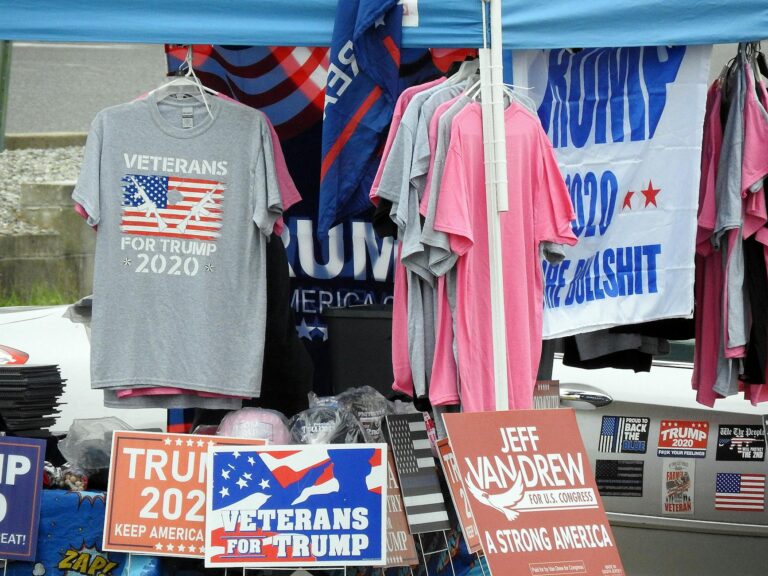
What Is TRUMP Coin? The Political Memecoin
TRUMP (often called $TRUMP or “Official Trump”) is a memecoin on the Solana blockchain that Donald Trump launched on January…

Trump Crypto Policy: What It Means for Investors
US crypto policy changed more in 2025 than in the previous decade, and Trump crypto news is now as much…
FAQ
What is a memecoin?
A memecoin is a cryptocurrency built around an internet joke, character or cultural moment rather than a product or protocol. Most are simple tokens on Ethereum, Solana or Base, though Dogecoin runs its own chain. Their value depends almost entirely on community attention and trading demand, which makes them among the most volatile assets in crypto.
Are memecoins a good investment?
Memecoins are speculation, not investments with cash flows. A handful have survived several market cycles, but most new tokens lose nearly all their value, and insiders often hold large shares. If you buy any, treat the money as already at risk, keep positions small, and prefer coins with deep liquidity and transparent supply over brand-new launches.
What is a good memecoin to buy?
No guide can tell you which memecoin will rise. Older coins with deep liquidity and many exchange listings, such as DOGE and SHIB, carry less contract risk than new launches, but they still swing sharply. Use our coin profiles to understand each token’s supply, history and incidents, and check live liquidity before you buy.
How do I know if a memecoin is a rug pull?
Warning signs include unlocked or deployer-held liquidity, a few linked wallets holding much of the supply, contracts where the owner can change fees or mint tokens, and tokens you cannot sell in a test. Hype from celebrities or anonymous influencers is not reassurance. When checks are unclear, skip the token.
Is Dogecoin a memecoin?
Yes. Dogecoin was created in December 2013 as a joke based on the Doge Shiba Inu meme, and it is generally considered the first memecoin. Unlike most newer memecoins, it runs its own proof-of-work blockchain rather than being a token on another network. It has no supply cap, so new coins are issued every year.
Crypto is volatile and risky; this is education, not financial advice. Do your own research.