
Last Updated: March 2026
Disclaimer: Day trading is extremely risky. Studies consistently show that 70-90% of day traders lose money. Never trade with money you can’t afford to lose. This guide is educational, not financial advice.
Crypto’s 24/7 markets, high volatility, and deep liquidity make it one of the most active day trading environments in the world. But crypto day trading is not easy money—it requires discipline, strategy, and risk management. This guide covers the essentials.
What Is Crypto Day Trading?
Day trading means opening and closing positions within the same day (or even minutes/hours) to profit from short-term price movements. Unlike long-term investing, day traders don’t care about fundamentals—they trade price action, technical patterns, and momentum.
Essential Day Trading Concepts
Technical Analysis
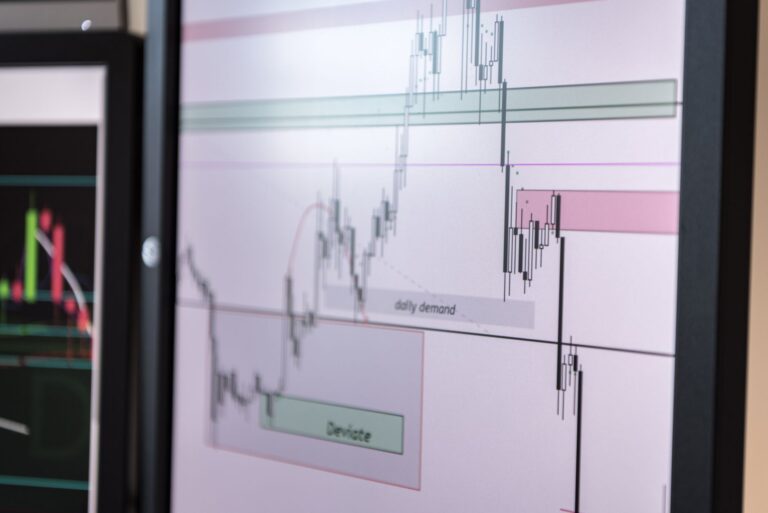
Day traders rely heavily on charts and technical indicators:
- Support and resistance: Price levels where buying/selling pressure historically concentrates
- Moving averages: 20, 50, and 200-period MAs to identify trends
- RSI (Relative Strength Index): Overbought (>70) and oversold (<30) signals
- Volume: Confirms the strength of price movements
- Candlestick patterns: Doji, engulfing, hammer patterns signal potential reversals
Order Types
- Market order: Buys/sells immediately at current price. Fast but no price guarantee
- Limit order: Sets your desired price. Fills only at your price or better
- Stop-loss: Automatically sells if price drops to a specified level, limiting losses
- Take-profit: Automatically sells when price reaches your target
Day Trading Strategies
Scalping
Making many small trades (seconds to minutes) to capture tiny price movements. Requires fast execution, low fees, and high concentration. Typical profit per trade: 0.1-0.5%.
Momentum Trading
Riding strong price movements in one direction. Buy when an asset breaks out with high volume, ride the trend, and exit when momentum fades. Works best during high-volatility periods.
Range Trading
Buying at support levels and selling at resistance in a defined price range. Works well in sideways/choppy markets. Less effective during strong trends.
Breakout Trading
Entering positions when price breaks above resistance or below support with strong volume. Breakouts can lead to rapid directional moves.
Risk Management (Most Important Section)
- Never risk more than 1-2% of your capital on a single trade: This is the #1 rule. A losing streak of 10 trades loses 10-20%, not everything
- Always use stop-losses: Enter every trade knowing exactly where you’ll exit if wrong
- Risk/reward ratio: Only take trades where potential profit is at least 2x your potential loss (2:1 R/R minimum)
- Don’t chase: If you missed an entry, wait for the next setup. FOMO trading loses money
- Set daily loss limits: If you lose X% in a day, stop trading. Come back tomorrow with a clear head
- Never add to losers: Averaging down on a day trade is a recipe for disaster
Where to Day Trade Crypto
Choose exchanges with low fees, high liquidity, and advanced order types:
- Binance: Lowest fees (0.10%), deepest liquidity, most pairs
- Bybit: Excellent for derivatives/futures trading
- OKX: Competitive fees with advanced tools
- Kraken: Reliable for US traders with advanced features
See our exchange comparison. For automated strategies, see our trading bots guide.
Day Trading Taxes
Day trading creates hundreds or thousands of taxable events per year. Every trade—even losing ones—must be reported. Short-term capital gains are taxed at your ordinary income tax rate (higher than long-term rates). You absolutely need crypto tax software. See our tax guide and tax software comparison.
Frequently Asked Questions
Can you make money day trading crypto?
A small percentage of traders consistently profit. The vast majority lose money after accounting for fees, taxes, and mistakes. Don’t start day trading expecting easy profits—treat it as a skill that takes months or years to develop, with significant tuition paid in losses.
How much money do you need to start day trading crypto?
Unlike stocks, crypto has no pattern day trader (PDT) rule requiring $25K. You can start with any amount. However, with very small accounts, fees eat a larger percentage of profits. $500-$1,000 is a reasonable minimum to learn with.
Is day trading better than holding?
For most people, holding (DCA + HODL) vastly outperforms day trading after accounting for fees, taxes, time, and stress. Day trading is a job, not a passive strategy. See our portfolio strategy for long-term approaches.