
A crypto price prediction is only useful if you can see how it was built. Every forecast for a coin rests on the same few inputs: how many tokens will exist, how much money the market might value the network at, and what could change either number. This hub lists every Shironeko price prediction, grouped by sector, and explains how to read one. Use it to find a coin’s outlook, compare it with similar projects, and check whether a price target is realistic before you trust it.
Key takeaways
- A price prediction is a scenario, not a promise. Treat any single target as one possible outcome among many.
- Price is market cap divided by circulating supply, so a target that ignores new token supply or unlocks is incomplete.
- Coins in the same sector tend to move together, so comparing a coin with its peers is more useful than reading its forecast alone.
- Forecasts published by banks, funds and analysts are dated opinions. Check when they were made and what they assumed.
- Every prediction here shows bear, base and bull ranges with the market cap behind each one, so you can check the maths yourself.
How to read a crypto price prediction
Start with market cap, not price. A coin’s price is its total market value divided by the number of coins in circulation, which is why a token priced at a fraction of a cent is not automatically “cheap”. Our guide to market cap in crypto includes a calculator that shows what a coin would cost at another coin’s valuation, a quick way to test whether a target needs an unrealistic amount of new money.
Next, look at supply. Inflation from staking rewards, scheduled unlocks for teams and investors, and token burns all change the denominator. Two coins with the same market cap growth can end up at very different prices if one doubles its circulating supply. Tokenomics explains how to find these schedules and what they mean for holders.
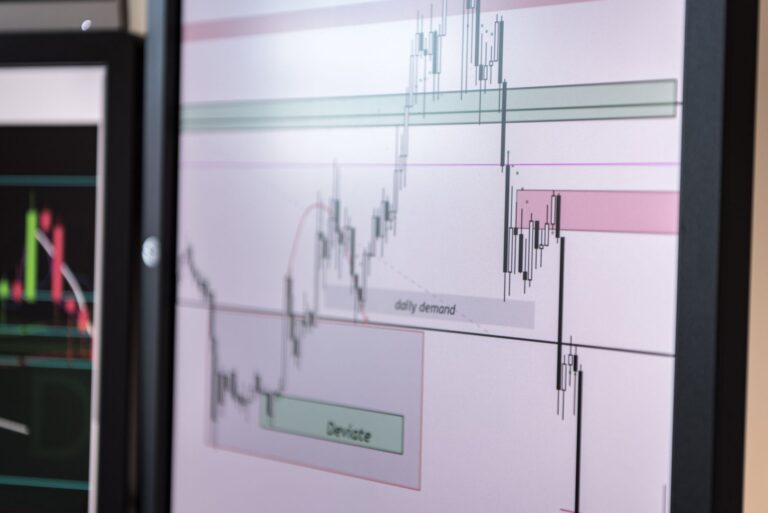
Finally, place the forecast in the wider market. Most coins rise and fall with Bitcoin, and their biggest moves have come during broad rallies. Our explainers on crypto market cycles, the next crypto bull run and whether the bull run is over cover that backdrop. Chart-based forecasts rely on technical analysis, which describes past price behaviour but cannot see news, hacks or regulation coming.
Why price targets for the same coin differ so much
Two forecasts for one coin can be ten times apart because they make different assumptions, not because one side has secret information. A bullish target usually assumes strong adoption, a rising crypto market and steady supply. A bearish one assumes the opposite. Many sites publish one number for each year without showing those assumptions, which makes the figure impossible to check. Be especially wary of targets that rely on a coin overtaking a much larger asset, of forecasts with no date, and of predictions written by anyone selling the token.
Price predictions are also different from crypto prediction markets, where people bet real money on events. Market odds can be a useful cross-check, but they reflect what traders expect, not what will happen.
Bitcoin and Ethereum
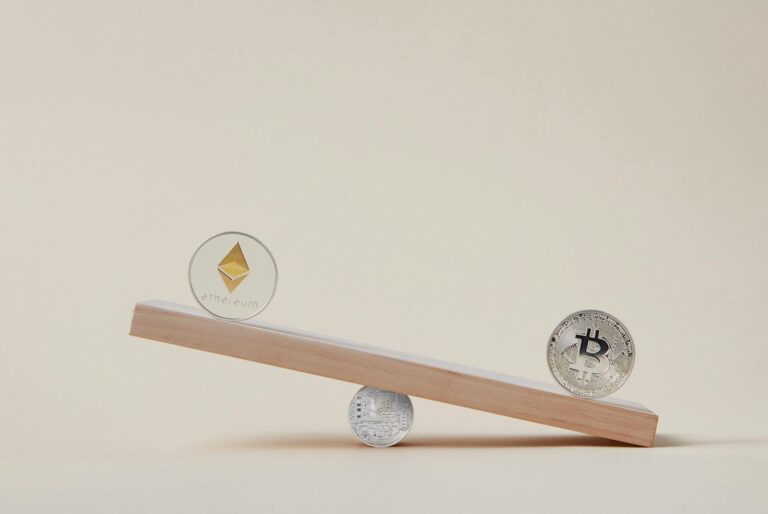
The two largest cryptocurrencies set the tone for everything else. Our Bitcoin price prediction covers the halving cycle, spot ETF demand and the bank and fund forecasts that get the most attention. The Ethereum price prediction looks at network fees, staking, layer-2 activity and how ETH supply changes with usage.
Large-cap coins
These are the most widely traded coins after Bitcoin and Ethereum. Payment and settlement networks include the XRP price prediction, the Stellar price prediction, the TRON price prediction, the Litecoin price prediction and the Bitcoin Cash price prediction. Exchange-linked tokens are covered by the BNB price prediction and the Cronos price prediction.
For smart contract platforms, see the Solana price prediction, Cardano price prediction, Avalanche price prediction, Polkadot price prediction, Sui price prediction and Hedera price prediction. The Toncoin (Gram) price prediction covers the Telegram-linked network, and the Chainlink price prediction covers the largest oracle network.
Other layer-1 blockchains
Smaller base-layer networks compete for developers and users, and their prices tend to swing more than the large caps. Our outlooks cover the NEAR price prediction, Aptos price prediction, Sei price prediction, Injective price prediction, Cosmos price prediction and Internet Computer price prediction. Older networks are covered by the Algorand price prediction, VeChain price prediction, IOTA price prediction and Sonic (formerly Fantom) price prediction, which covers the S token that replaced FTM. Proof-of-work fans can compare the Kaspa price prediction, and the Celestia price prediction covers the data availability network that other chains build on.
Layer 2s and scaling networks
Layer 2s settle on another chain, so their tokens depend on both their own activity and the health of the base layer. See the Arbitrum price prediction, Polygon price prediction, Mantle price prediction and Immutable price prediction for Ethereum scaling, and the Stacks price prediction for a network built around Bitcoin.
DeFi tokens
Decentralized finance tokens are often tied to protocol revenue, fee switches or buybacks, which makes their supply and income easier to analyse than most. Our DeFi outlooks include the Uniswap price prediction, Aave price prediction, Hyperliquid price prediction, Ethena price prediction, Jupiter price prediction and the Ondo price prediction for tokenized real-world assets.
AI, data and DePIN tokens
This group links tokens to computing power, storage, data or physical infrastructure. Read the Bittensor price prediction, Fetch.ai price prediction, Render price prediction and Worldcoin price prediction for AI-linked projects. Storage and data networks are covered by the Filecoin price prediction, Arweave price prediction and The Graph price prediction, while the Theta price prediction and Helium price prediction cover video delivery and wireless networks.
Privacy coins and memecoins
Privacy coins face exchange delistings and regulatory pressure that other coins do not, which our Zcash price prediction and Monero price prediction both factor in. Memecoins have no cash flow to anchor a valuation, so their forecasts are the least reliable of all: the Dogecoin price prediction, Shiba Inu price prediction and PEPE price prediction show how wide the range of outcomes is.
How we build our price predictions
All of our price predictions follow one method. Each page sets out a bear, base and bull case for the end of 2026, the end of 2027 and 2030, and shows the market cap and circulating supply each price implies. Forecasts from named banks, funds and research firms are quoted with the date they were made. We do not say a coin “will” reach a price or recommend buying it. Prices move quickly, so check the update date at the top of each page and recalculate with today’s market cap.
Browse every crypto price prediction guide
Start here

What Is Market Cap in Crypto? Why It Matters
Market capitalization (market cap) is a cryptocurrency’s current price multiplied by its circulating supply. It is the quickest way to…

What Is Tokenomics? Understanding Crypto Economics
Tokenomics (token + economics) is the set of rules that decides how many units of a crypto asset exist, who…

Crypto Market Cycles Explained: Bull and Bear Patterns
Crypto market cycles are the recurring boom-and-bust waves that crypto prices have gone through since Bitcoin’s early years. A long,…
Next Crypto Bull Run: What History Tells Us About 2026
Predicting the exact timing of the next crypto bull run is impossible, but history offers a useful frame. Crypto markets…

Crypto Technical Analysis: A Beginner’s Guide (2026)
Crypto technical analysis (TA) is the study of price charts to estimate the probable direction of an asset, based on…

Crypto Prediction Markets: Polymarket & Beyond
Crypto prediction markets let you buy shares in the outcome of a real event: an election, a Fed decision, a…
Bitcoin and Ethereum

Bitcoin Price Prediction 2026–2030: BTC Scenarios
Where could BTC trade by the end of 2026, in 2027 and by 2030? Bitcoin was about $80,200 on 27…

Ethereum Price Prediction 2026–2030: ETH Scenarios
Ether changed hands for about $2,324 on 27 October 2026 according to CoinGecko, which put the network’s market value near…
Large-cap coins

XRP Price Prediction 2026–2030: Scenarios and Drivers
Last updated: 26 October 2026 Where could XRP trade at the end of 2026, in 2027 and by 2030? This…

BNB Price Prediction 2026–2030: BNB Forecast Scenarios
Last updated: 26 October 2026 BNB is the one large-cap token whose value is tied directly to a single company:…

Solana Price Prediction 2026–2030: SOL Scenarios
Six days after Solana switched on the biggest consensus change in its history, SOL was trading around $101. That price,…

Cardano Price Prediction 2026–2030: ADA Scenarios
Last updated: 26 October 2026 ADA has had one of the hardest years of any large cryptocurrency. It cost about…

TRON Price Prediction 2026–2030: TRX Scenarios
Last updated: 26 October 2026 TRX has done something few large tokens managed in 2026: it went up. While Bitcoin…

Toncoin (Gram) Price Prediction 2026–2030: GRAM Scenarios
Last updated: 26 October 2026 First, a naming note: Toncoin no longer exists under that name. On 15 June 2026…

Chainlink Price Prediction 2026–2030: LINK Scenarios
Last updated: 26 October 2026 Chainlink’s business had a strong 2026; its token did not. LINK changed hands at about…

Avalanche Price Prediction 2026–2030: AVAX Scenarios
Last updated: 27 October 2026 This Avalanche price prediction is more cautious than the version we published in March. AVAX…

Stellar Price Prediction 2026–2030: XLM Scenarios
Last updated: 27 October 2026 On 27 October 2026 XLM was priced near $0.169, per CoinGecko, for a market value…

Hedera Price Prediction 2026–2030: HBAR Scenarios
Last updated: 26 October 2026 HBAR has a famous governing council and a weak price chart. On 26 October 2026…

Litecoin Price Prediction 2026–2030: LTC Scenarios
Last updated: 26 October 2026 Litecoin is 15 years old, has a fixed 84 million coin cap and halves its…

Bitcoin Cash Price Prediction 2026–2030: BCH Scenarios
Last updated: 27 October 2026 BCH changed hands at about $280 on 27 October 2026, per CoinGecko, for a market…
Polkadot Price Prediction 2026–2030: DOT Scenarios
Last updated: 26 October 2026 Polkadot spent 2026 cutting its token issuance and capping supply, and DOT still set a…

Sui Price Prediction 2026–2030: SUI Forecast Scenarios
Last updated: 26 October 2026 SUI went from one of 2025’s standout layer 1 tokens to one of 2026’s hardest-hit.…

Cronos Price Prediction 2026–2030: CRO Scenarios
Last updated: 27 October 2026 Most price forecasts treat supply as fixed. For CRO that would be a mistake: the…
Other layer-1 blockchains

NEAR Price Prediction 2026–2030: NEAR Scenarios
Last updated: 27 October 2026 NEAR traded at about $4.52 on 27 October 2026, per CoinGecko, valuing the network at…
Aptos Price Prediction 2026–2030: APT Scenarios
Last updated: 27 October 2026 APT traded at about $0.69 on 27 October 2026, per CoinGecko, giving Aptos a market…

Sei Price Prediction 2026–2030: SEI Scenarios
Last updated: 27 October 2026 SEI traded at about $0.052 on 27 October 2026, per CoinGecko, giving it a market…

Injective Price Prediction 2026–2030: INJ Scenarios
INJ has been one of 2026’s stronger mid-cap altcoins: after closing near $2.75 on 3 April, it traded at about…

Cosmos Price Prediction 2026–2030: ATOM Scenarios
ATOM traded at about $1.64 on 27 October 2026, per CoinGecko, for a market value of roughly $881 million (rank…

ICP Price Prediction 2026–2030: Internet Computer Outlook
Internet Computer (ICP) traded at about $2.60 on 27 October 2026, per CoinGecko, giving it a market capitalization of roughly…

Algorand Price Prediction 2026–2030: ALGO Scenarios
Algorand (ALGO) was priced at about $0.104 on 27 October 2026, per CoinGecko, giving it a market capitalization of roughly…

VeChain Price Prediction 2026–2030: VET Scenarios
Last updated: 27 October 2026 VET was worth about $0.0066 on 27 October 2026, per CoinGecko, for a market cap…

IOTA Price Prediction 2026–2030: IOTA Scenarios
Last updated: 27 October 2026 IOTA was priced at about $0.042 on 27 October 2026, per CoinGecko, valuing it near…
Sonic (Fantom) Price Prediction 2026–2030: S Scenarios
Last updated: 27 October 2026 Fantom’s FTM no longer trades as a live project: holders were moved 1:1 into Sonic’s…

Kaspa Price Prediction 2026–2030: KAS Scenarios
Kaspa (KAS) changed hands at about $0.035 on 27 October 2026, per CoinGecko, for a market capitalization of roughly $980…

Celestia Price Prediction 2026–2030: TIA Scenarios
Last updated: 27 October 2026 TIA traded around $0.54 on 27 October 2026, according to CoinGecko, giving Celestia a market…
Layer 2s and scaling

Arbitrum Price Prediction 2026–2030: ARB Scenarios
Last updated: 26 October 2026 ARB was quoted at about $0.169 on 26 October 2026, per CoinGecko, for a market…

Polygon Price Prediction 2026–2030: POL Scenarios
POL, the token behind Polygon, was worth about $0.091 on 27 October 2026, according to CoinGecko, with a market capitalization…
Mantle Price Prediction 2026–2030: MNT Scenarios
Last updated: 27 October 2026 MNT changed hands at about $0.51 on 27 October 2026, per CoinGecko, valuing Mantle at…

Immutable Price Prediction 2026–2030: IMX Scenarios
Last updated: 27 October 2026 Immutable’s token set a new all-time low in August 2026, below any earlier price on…

Stacks Price Prediction 2026–2030: STX Scenarios
Last updated: 27 October 2026 STX traded at about $0.30 on 27 October 2026, per CoinGecko, valuing Stacks at roughly…
DeFi tokens

Uniswap Price Prediction 2026–2030: UNI Scenarios
Last updated: 27 October 2026 UNI changed character in 2026. Since late December 2025 a share of Uniswap’s trading fees…

Aave Price Prediction 2026–2030: AAVE Scenarios
Last updated: 27 October 2026 AAVE traded at about $135 on 27 October 2026, per CoinGecko, giving it a market…

Hyperliquid Price Prediction 2026–2030: HYPE Scenarios
Last updated: 26 October 2026 HYPE changed hands at roughly $77 on 26 October 2026, per CoinGecko, for a market…
Ethena Price Prediction 2026–2030: ENA Scenarios
Last updated: 26 October 2026 ENA, the governance token of the Ethena synthetic-dollar protocol, was priced at about $0.204 on…

Jupiter Price Prediction 2026–2030: JUP Scenarios
Last updated: 26 October 2026 JUP, the token of Solana’s leading DEX aggregator Jupiter, sold for about $0.277 on 26…
Ondo Price Prediction 2026–2030: ONDO Scenarios
Last updated: 27 October 2026 ONDO was worth about $0.41 on 27 October 2026, per CoinGecko, for a market cap…
AI, data and DePIN

Bittensor Price Prediction 2026–2030: TAO Scenarios
Last updated: 26 October 2026 TAO, the token of the decentralised AI network Bittensor, traded at about $250 on 26…

Fetch.ai Price Prediction 2026–2030: FET Scenarios
Last updated: 27 October 2026 FET, the token of Fetch.ai and the Artificial Superintelligence (ASI) Alliance, was priced at about…
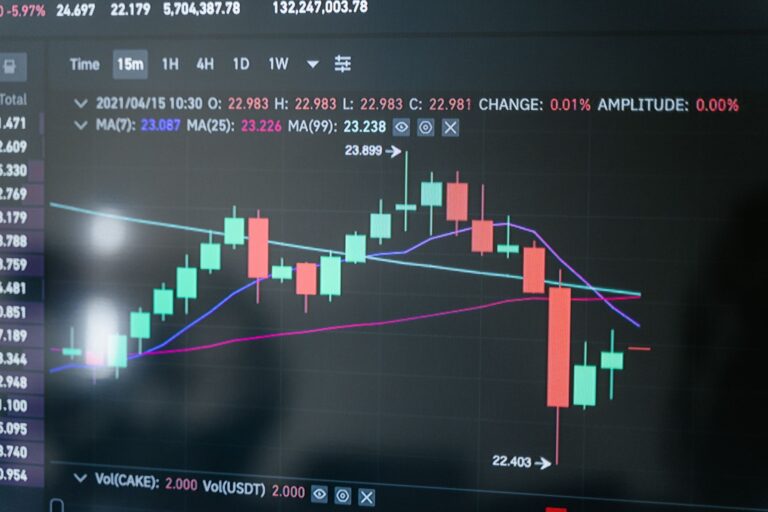
Render Price Prediction 2026–2030: RENDER Scenarios
This Render price prediction asks a narrow question: what range is RENDER likely to trade in over the next few…

Worldcoin Price Prediction 2026–2030: WLD Scenarios
Last updated: 27 October 2026 WLD, the token of the World network (formerly Worldcoin), was about $0.44 on 27 October…

Filecoin Price Prediction 2026–2030: FIL Scenarios
October 2026 was the month Filecoin’s supply story changed. On 15 October the six-year vesting of tokens for Protocol Labs…

Arweave Price Prediction 2026–2030: AR Scenarios
Last updated: 27 October 2026 AR was worth about $3.38 on 27 October 2026, per CoinGecko, with a market cap…

The Graph Price Prediction 2026–2030: GRT Scenarios
Last updated: 27 October 2026 GRT changed hands at about $0.022 on 27 October 2026, per CoinGecko, for a market…

Theta Network Price Prediction 2026–2030: THETA Scenarios
Last updated: 27 October 2026 THETA has one feature that makes forecasting unusually tidy: exactly 1 billion tokens exist and…

Helium Price Prediction 2026–2030: HNT Scenarios
Last updated: 27 October 2026 HNT changed character in 2026. The token that used to market a shrinking, halving supply…
Privacy coins and memecoins

Zcash Price Prediction 2026–2030: ZEC Scenarios
Last updated: 26 October 2026 Zcash was trading at about $1,219 on 26 October 2026, per CoinGecko, giving it a…

Monero Price Prediction 2026–2030: XMR Scenarios
Last updated: 27 October 2026 XMR traded at about $594 on 27 October 2026, per CoinGecko, giving Monero a market…

Dogecoin Price Prediction 2026–2030: DOGE Scenarios
On 27 October 2026, CoinGecko had DOGE near $0.0775, a total value of about $12.1 billion that ranked it twelfth…

Shiba Inu Price Prediction 2026–2030: SHIB Scenarios
Last updated: 26 October 2026 Any Shiba Inu price prediction has to start with one number: about 589 trillion SHIB…

PEPE Price Prediction 2026–2030: PEPE Scenarios
Last updated: 27 October 2026 PEPE was trading at about $0.00000431 on 27 October 2026, per CoinGecko. That works out…
FAQ
Are crypto price predictions accurate?
Not reliably. Crypto prices depend on market sentiment, regulation, supply changes and events no one can foresee, so even well-reasoned forecasts are often far off. A good prediction is useful because it shows its assumptions, not because its number turns out right.
Which crypto price prediction should I read first?
Start with Bitcoin, because most other coins follow its direction. Then read the prediction for the coin you are interested in alongside one or two coins from the same sector.
Why do some predictions use a range instead of one price?
A range is more honest. A single number hides the assumptions behind it, while bear, base and bull cases show how the outcome changes if adoption, market conditions or token supply differ from what is expected.
How can I check whether a price target is realistic?
Multiply the target price by the expected circulating supply to get the implied market cap, then compare it with the largest coins today. If a target needs a smaller project to be worth more than Ethereum, it needs very strong evidence.
Should I buy a coin because of its price prediction?
No. Price predictions are scenarios for education. Base any decision on your own research, your time horizon and how much you could afford to lose.
Crypto is volatile and risky; this is education, not financial advice. Do your own research.
